
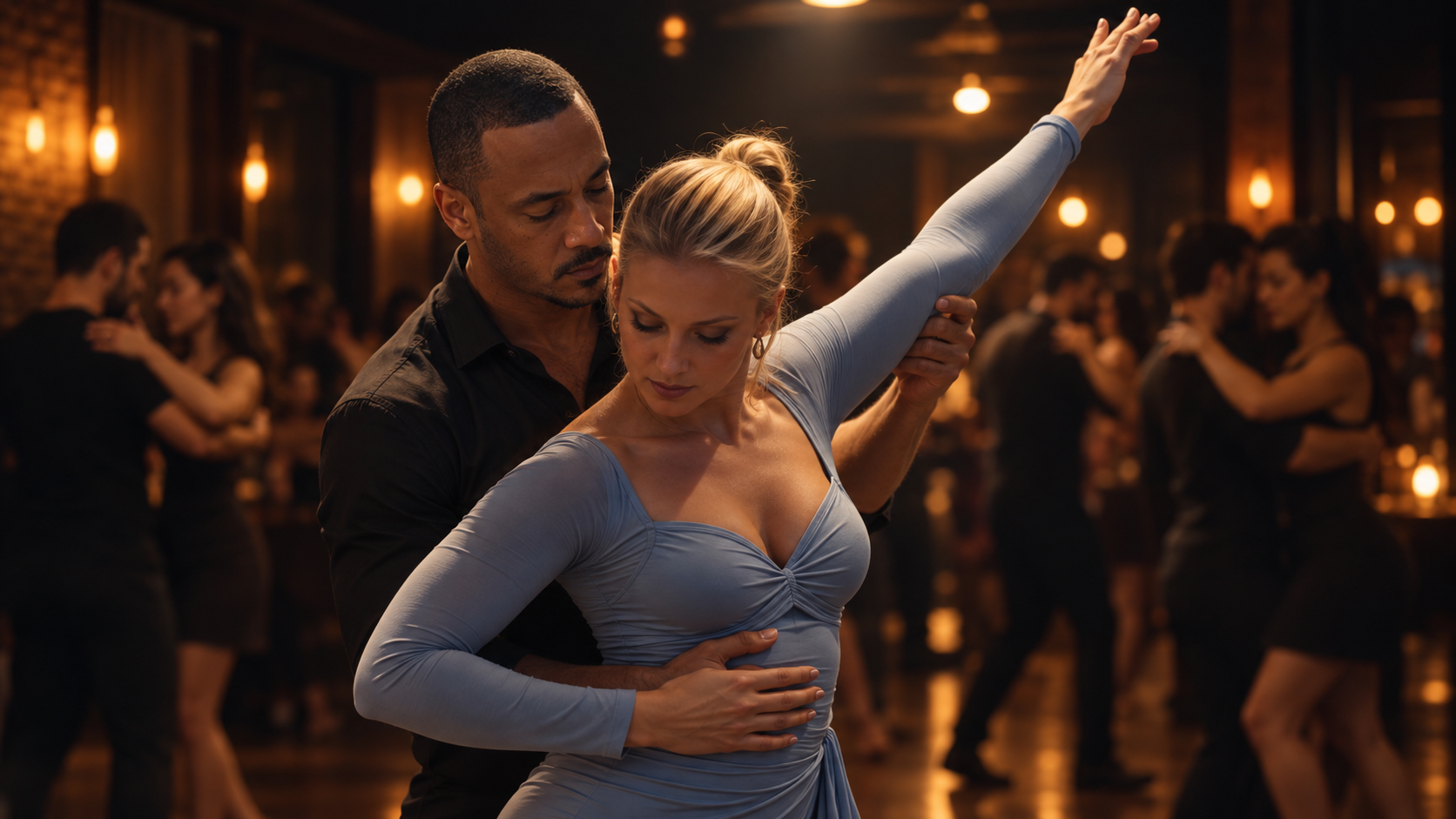
You Do Not Need to Have It
Figured Out Before You Arrive.
Walking into your first Kizomba class can feel exciting.
It can also feel unfamiliar.
You may wonder whether everyone else will already know what they are doing.
You may worry about getting the steps wrong.
You may wonder whether you have rhythm, whether you will feel awkward, or whether you will be able to keep up.
All of that is normal.
Your first class is not an audition.
It is not a performance.
And nobody expects you to arrive already knowing how to dance.
You are coming to learn.
An Introduction, Not an Examination.
Your first experience with Kizomba should introduce you to the ideas that make the dance work rather than overwhelm you with movement.
You may begin exploring concepts such as:
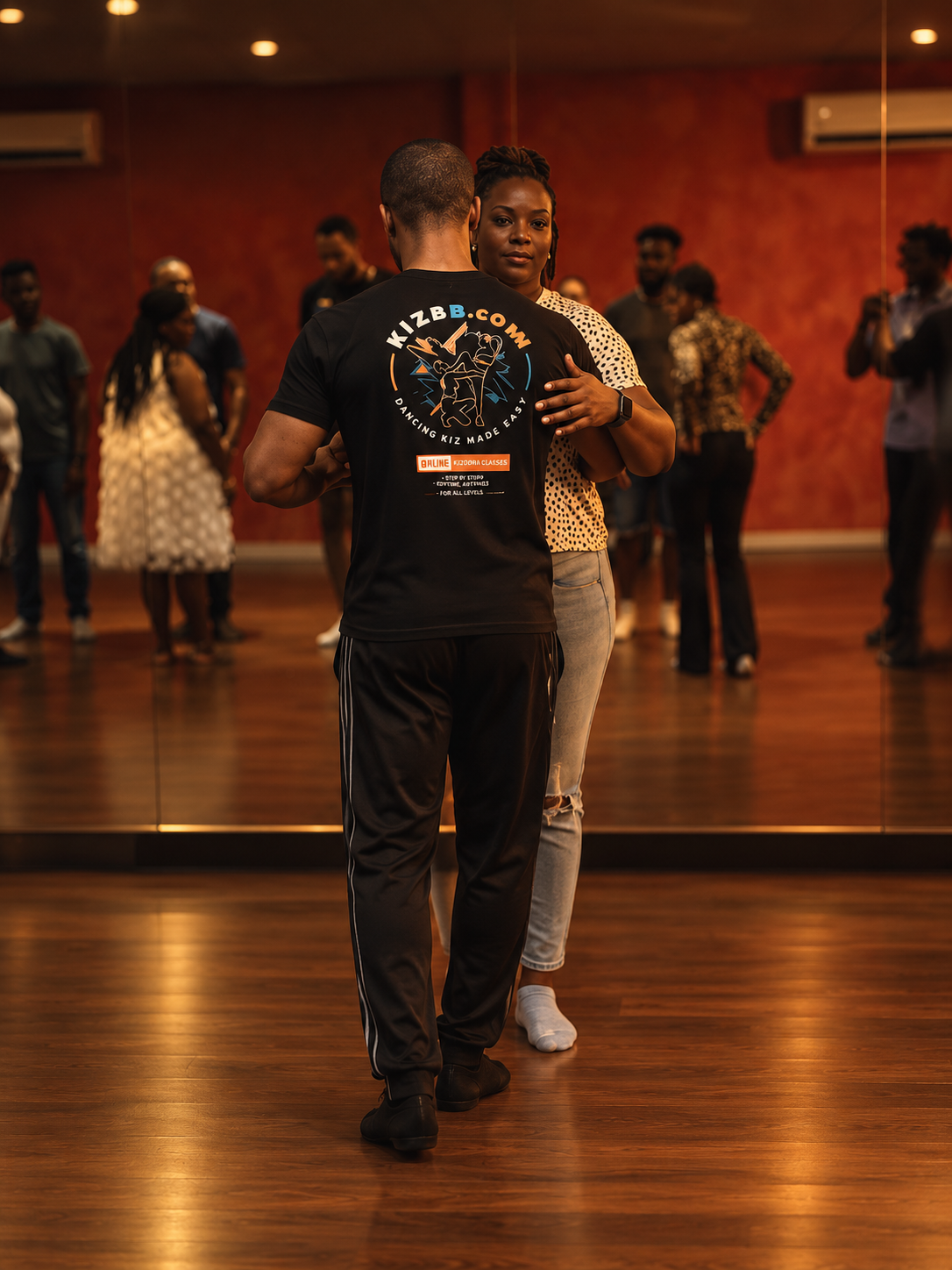
How you stand.
How you move your weight.
How you find the rhythm.
How two people connect.
How a lead communicates.
How a follow responds.
How simple movement can become a dance.
You are unlikely to master everything immediately.
You are not supposed to.
The goal is simply to begin understanding what you are feeling and doing.
Your first class is an introduction, not a final examination.
Simplicity Is Not a Lack of Depth.
One of the surprises for some beginners is how much attention can be placed on movements that appear simple.
That is intentional.
Before dancers can move comfortably into more advanced material, they need enough control to make the fundamentals work.
A small movement performed with good timing, balance and connection can teach you far more than an impressive sequence you do not yet understand.
So if your first class feels deliberately simple, do not mistake simplicity for a lack of depth.
Simple is where the foundation begins.
Mistakes Are Information.
Good.
You are learning something new.
You may step on the wrong foot.
You may move too early.
You may forget what was just demonstrated.
You may understand something mentally and still find that your body refuses to cooperate.
You may even laugh at yourself.
That is all part of it.
There is no meaningful learning process in which everything works perfectly on the first attempt.
Mistakes are information.
They show you what your body has not yet understood.
A lot of people arrive at dance classes convinced that they have no rhythm.
Often, what they really mean is that they have never been taught how to recognise rhythm in a way that connects to movement.
That is very different.
Some people understand it quickly.
Others need more time.
Neither determines how far you can eventually progress.
Your first class is not about proving that you already possess everything you need.
It is about beginning to develop it.
Comfortable Enough to Learn.
Choose clothing that allows you to move comfortably.
You do not need to dress like a professional dancer.
The priority is being able to move without constantly adjusting your clothes or feeling restricted. Wearing sneakers is fine.
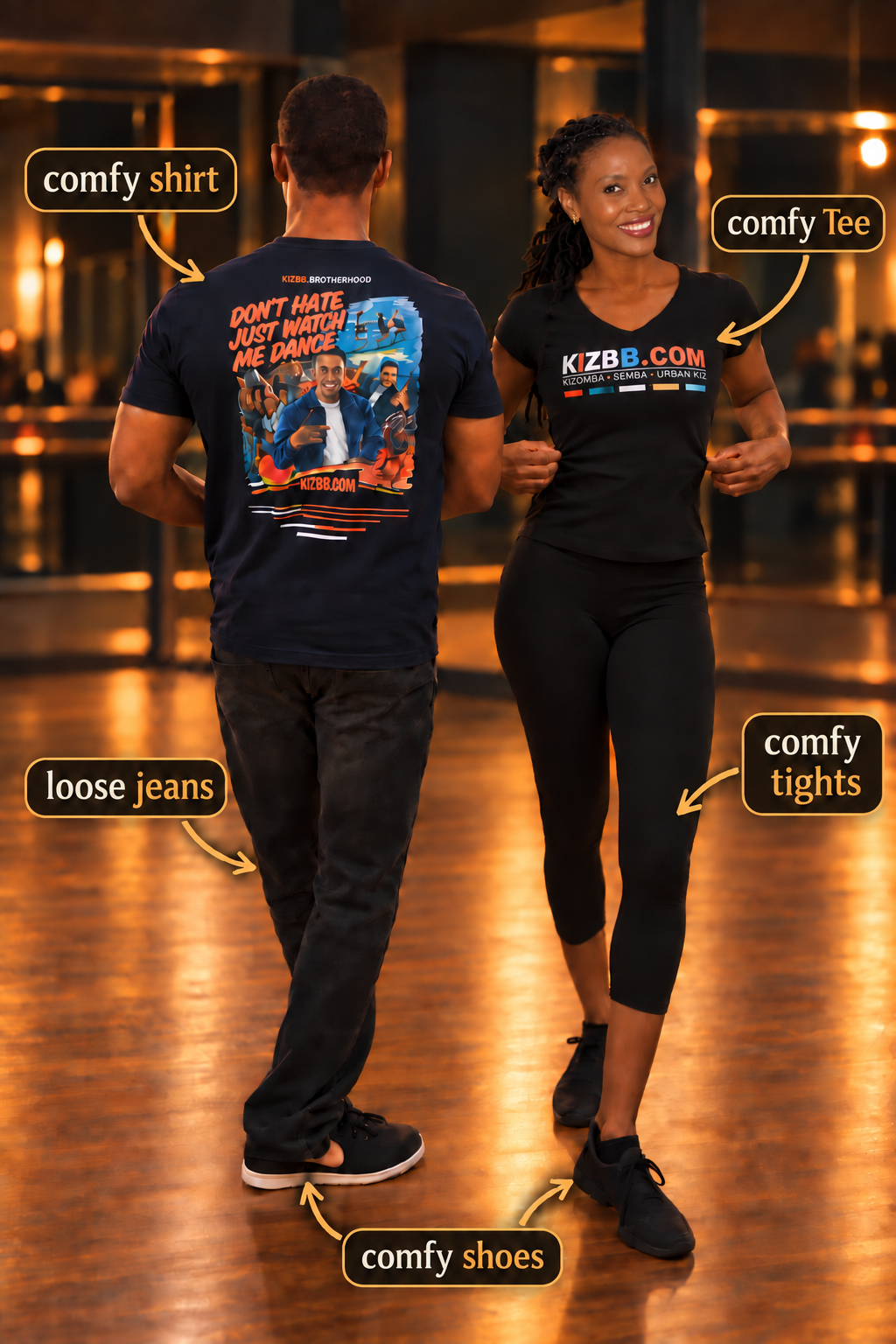
Comfortable.
Clean.
Breathable.
Easy to move in.
Footwear should also allow you to move comfortably and safely.
Avoid making your first lesson more difficult by wearing something that prevents you from moving naturally.
The goal is not to look the part.
The goal is to be comfortable enough to learn.
Whenever possible, avoid rushing through the door at the last second.
Give yourself a little time to settle.
Put your belongings away.
Become familiar with the space.
Allow your mind to move away from whatever happened during the day.
Learning partner dance requires attention.
A few quiet minutes before beginning can make a surprisingly large difference.
Give yourself permission to be present.

Comfort Comes Through Familiarity.
Almost everyone does.
Partner dancing requires a type of physical communication that many people have never experienced before.
You are learning how close or far away to stand.
How to move without colliding.
How to communicate movement without speaking.
How to respond to another person’s body while still controlling your own.
That can feel strange initially.
Then, gradually, it stops feeling strange.
What once required concentration begins to feel more natural.
Comfort comes through familiarity.
It is very easy to enter a class and immediately look around.
Who is better than me?
Who picked this up faster?
Why does that person look so comfortable?
Remember that you do not know anyone else’s history.
They may have danced before.
They may have taken classes previously.
They may simply learn differently.
Their journey has nothing to do with the value of yours.
Your job during your first class is not to keep up with another person.
Your job is to learn something you did not understand when you walked in.
You are not expected to understand everything immediately.
If something feels unclear, ask.
Sometimes what looks like a movement problem is actually a misunderstanding of one small concept.
A question can clarify it.
There is no prize for remaining confused quietly.
Good training should create understanding, not simply give instructions.
Questions are part of learning.
At some point, an instructor may adjust something you are doing.
Your posture.
Your timing.
Your weight.
Your connection.
Your movement.
That is not a judgment of you.
It is instruction.
If nothing ever needs correcting, there would be very little reason to take a class.
Try to view correction as useful information.
It means someone is paying attention to what you are doing and helping you improve it.
Correction is not the opposite of encouragement.
It is part of good teaching.
This is another pressure beginners sometimes put on themselves.
You leave class and realise you cannot remember every detail.
That is normal.
Learning happens in layers.
You may remember one concept clearly and forget another.
Something that made no sense today may suddenly become obvious several lessons later.
The objective is not to store an entire class perfectly in your memory.
The objective is to keep building.
Understanding grows through repetition.
Not perfection.
Not advanced movements.
Not suddenly becoming a dancer overnight.
You understood something about rhythm that you did not understand before.
You became more aware of how your body moves.
You experienced connection with another dancer.
You completed a basic movement that initially felt unfamiliar.
You became curious enough to want to learn more.
That is progress.
And progress is enough.
Your first class opens the door.
What happens after that depends partly on you.
The dancers who develop are generally the ones who keep returning to the fundamentals, practising what they learn, asking questions and allowing themselves enough time to improve.
One class can introduce Kizomba.
Consistency begins to turn that introduction into understanding.
And eventually, understanding creates freedom.
You do not need to arrive confident.
You do not need to arrive coordinated.
You do not need to arrive knowing the terminology.
You do not need to arrive looking like a dancer.
Come curious.
Come willing to learn.
Come prepared to get a few things wrong.
That is more than enough to begin.
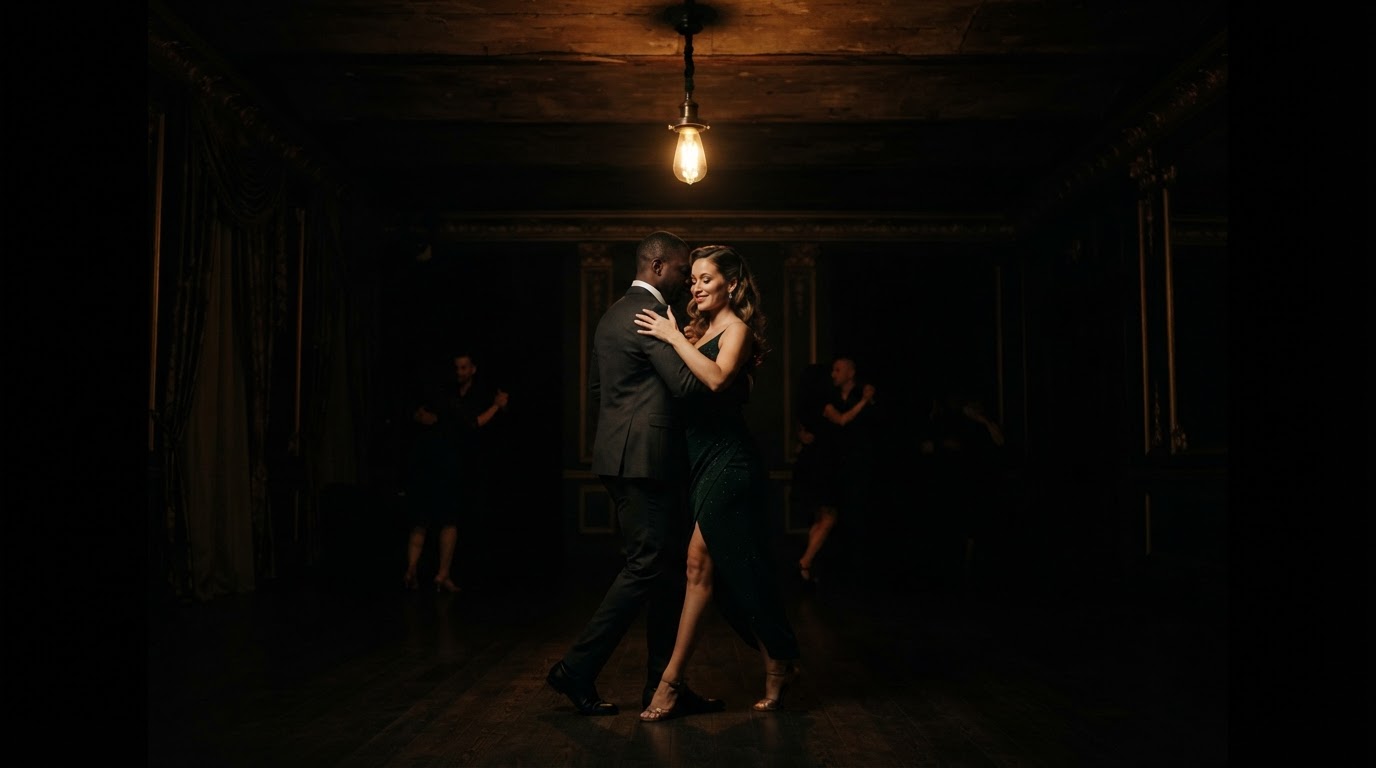
Your first class is not about proving that you can dance.
It is about discovering that you can learn.
Everything else can be built from there.
© 2026 KIZBB · BRIDGETOWN, BARBADOS