

Being New Means You Do Not
Yet Know What You Do Not Know.
When you first enter a dance community, almost everything is unfamiliar.
Different styles.
Different instructors.
Different terminology.
Different opinions.
Different teaching methods.
Different communities.
And because you are new, you do not yet have the experience necessary to evaluate everything with complete confidence.
That is normal.
Some things only become clearer with time.
The goal is not to make perfect decisions from day one.
The goal is to avoid some of the mistakes that can create unnecessary confusion while you are still building enough experience to make better decisions for yourself.
One of the first decisions you make is where to begin.
That decision matters.
Before joining a school or programme, take some time to understand what is being offered.
What style is being taught?
What is the instructor's approach?
What is the instructor's background and experience in kizomba?
Where were they taught, by who and what type of training or development has shaped their teaching? Can these claims be verified?
What does the programme focus on?
What type of learning environment is it?
What are you hoping to learn?
Does what the school teaches align with what you want from your dance journey?
Different dancers choose different schools for different reasons.
For some people, community matters most.
For others, friends.
For others, convenience.
And for others, the quality and depth of the dancing itself.
None of those reasons are automatically wrong.
But understanding what you want makes it easier to choose an environment that aligns with your goals.
Do your research before you commit — not because you need to know everything, but because you should understand what you are choosing.
Exposure can be valuable.
But timing matters.
A brand-new dancer who is simultaneously learning different styles, methods and interpretations from several instructors can easily become confused.
One instructor may explain a movement one way.
Another may approach it differently.
Both may have valid reasons for what they teach.
But as a beginner, you may not yet have enough experience to understand why those differences exist.
So instead of gaining more knowledge, you can end up without a stable foundation at all.
At the beginning, focus.
Complete the beginner programme.
Give the method enough time to make sense.
Develop enough understanding that you can comfortably complete a dance and recognise the basic principles behind what you are doing.
Once that foundation exists, broader exposure becomes much easier to process.
Build a foundation before you start collecting interpretations.
Learning to dance can be difficult.
Something feeling awkward does not automatically mean the school is wrong for you.
You may struggle with timing.
Coordination.
Connection.
Remembering movements.
Getting your body to do what your mind understands.
All of that can be part of learning.
So do not assume that difficulty automatically means:
“This method does not work.”
or:
“I need another instructor.”
Give the learning process a reasonable opportunity.
A few difficult classes are not enough to judge your potential or the quality of an entire programme.
Difficulty is not always a warning sign. Sometimes it is simply part of development.
The opposite mistake can also happen.
Starting somewhere does not mean you must stay there forever.
After giving yourself enough time and putting in genuine effort, periodically evaluate your development.
Am I becoming more comfortable?
Are the fundamentals becoming clearer?
Can I complete a basic dance more easily than I could before?
Do I understand more about what I am doing and why?
Am I making measurable progress?
If months pass, you are practising, asking questions and doing the work, yet everything remains consistently unclear, it may be worth exploring another approach.
There is nothing wrong with that.
Try another environment.
Give it your attention.
Evaluate again.
The mistake is not changing schools.
The mistake is constantly jumping between them before giving any one approach enough time to work.
Time alone does not create skill.
Saying:
“I have been dancing for six months.”
does not tell us how much dancing actually happened during those six months.
One class each week for six months is only a limited number of sessions.
And if nothing happens between those sessions, progress will naturally be slower.
A weekly class can introduce information.
But development also requires repetition.
Some things can be practised without a partner.
Basic movement.
Weight transfer.
Balance.
Body control.
Reviewing material.
Simply becoming more comfortable moving.
There is nothing wrong with progressing slowly.
But avoid expecting the results of intensive practice from occasional participation.
Your progress will usually reflect the quality and consistency of the work you put in.
Build Before You Chase.
Beginners naturally notice impressive movements.
They look exciting.
They look like progress.
And they can become something people want to learn immediately.
But adding increasingly advanced-looking material before the foundation is ready can create the illusion of development without actually improving the dancer underneath it.
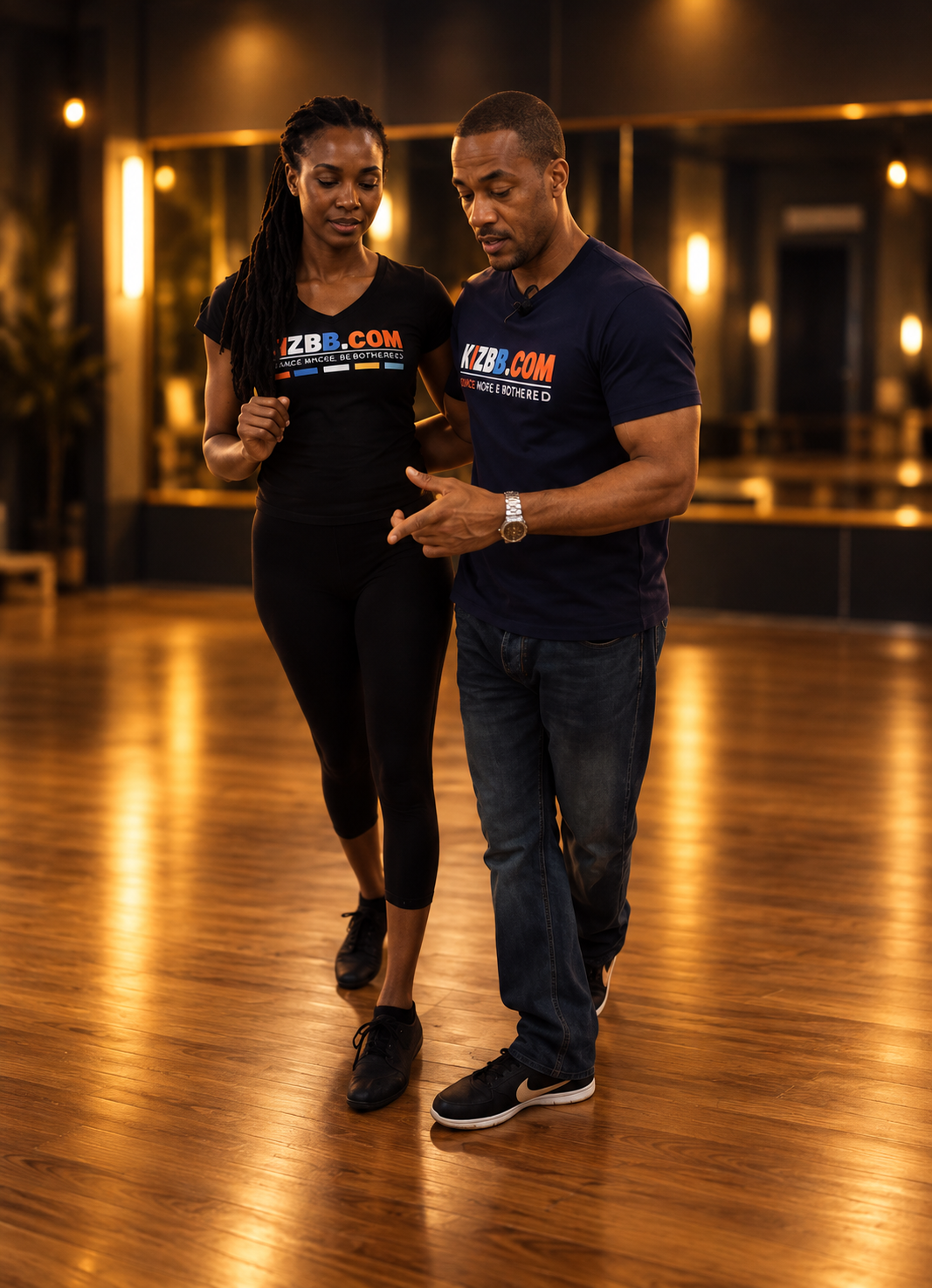
“Can I perform this movement?”
“Can I perform it with control?”
“Do I understand what is happening?”
“Can I lead or follow it properly?”
“Can I use it comfortably with another person?”
If not, adding more may simply give you more things to perform badly.
Do not confuse a larger move vocabulary with stronger dancing.
Practice matters.
But repetition alone is not enough.
If something is being done incorrectly and repeated hundreds of times, the repetition can make the mistake feel normal.
That is why feedback matters.
Ask questions.
Get corrections.
Return to your instructor when something feels uncertain.
Practice should reinforce good information — not simply reinforce whatever happened to feel easiest.
Practice makes things familiar. Make sure you are becoming familiar with the right things.
Some beginners keep waiting.
They tell themselves:
“I need a few more classes first.”
Then:
“I need to know more moves.”
Then:
“I need to feel more confident.”
And the social floor keeps getting postponed.
Classes teach.
Practice develops.
But social dancing teaches something different.
Real partners feel different.
People respond differently.
Timing feels different.
Things do not always happen exactly as they did during class.
You do not need to wait until you feel perfect.
You never will.
Start when you have enough understanding to participate safely and comfortably.
Then allow the experience itself to become part of your development.
You do not become ready for social dancing only by preparing for it.
At some point, you become ready by doing it.
Beginners often judge progress visually.
Does the movement look impressive?
Do I look like that dancer online?
Can I perform that sequence?
But some of the most important improvements are not immediately dramatic.
Better timing.
Better balance.
Cleaner weight transfer.
Clearer communication.
More comfortable connection.
Greater control.
The ability to recover when something goes wrong.
Those things may not produce the most impressive video.
But they build better dancers.
Do not measure all progress by spectacle.
Sometimes the improvements that matter most are the ones you can feel before anyone else can see them.
Being new does not mean you should remain confused.
Ask.
If you do not understand why something is taught a certain way, ask.
If terminology is unfamiliar, ask.
If you want to understand the methodology, ask.
If something you hear in the community does not make sense, ask for clarification rather than immediately accepting someone else’s interpretation.
Questions help turn information into understanding.
And in Barbados, the Kizomba instructors and organisations are generally approachable.
If you genuinely want to understand someone’s teaching style, methodology, rules or approach, go to the source.
Allow people the opportunity to explain what they actually believe and why they teach the way they do.
Ask for clarity before forming conclusions.
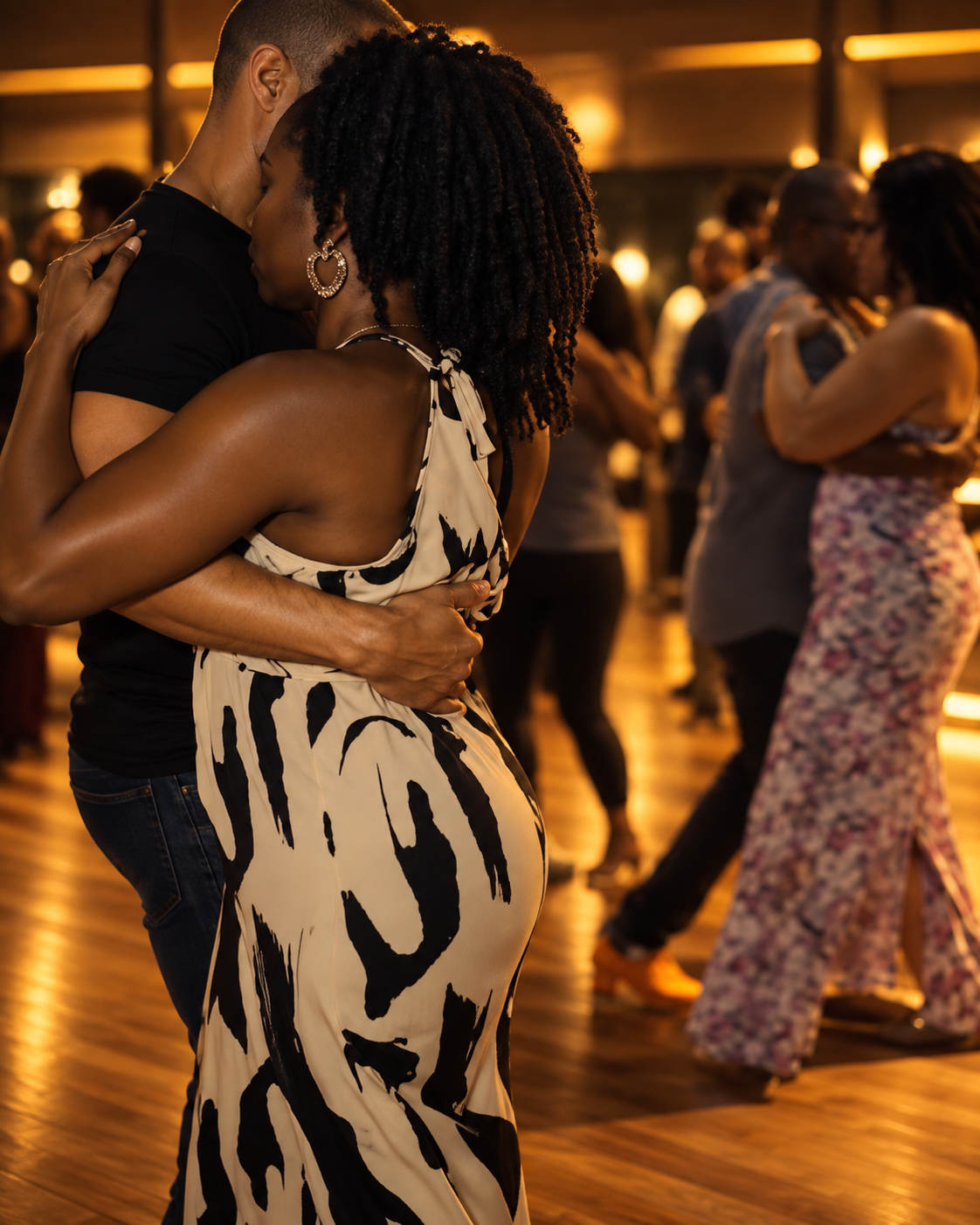
You Came to Dance.
Dance communities are still communities.
People have history.
Different groups may have disagreements.
Different instructors may have different philosophies.
Some personalities will naturally get along better than others.
As a beginner, you do not need to inherit every disagreement that existed before you arrived.
You came to dance.
Remember that.
Stay friendly.
Be respectful.
Form your own experiences.
Avoid unnecessary gossip and conversations that do nothing to improve your dancing or your enjoyment of the community.
That does not mean ignoring genuine problems.
It means knowing the difference between information that affects you and noise that simply pulls your attention away from why you started.
Do not allow other people’s history to become the focus of your journey.
A beginner will make mistakes.
A lot of them.
That is not evidence that you lack ability.
It is evidence that you are doing something new.
Some concepts will click quickly.
Others may take weeks.
Something that seems impossible today may become completely natural later.
The mistake is not getting things wrong.
The mistake is allowing every mistake to become evidence that you cannot learn.
Give yourself permission to be a beginner.
Improvement matters.
Technique matters.
Practice matters.
But most people did not begin dancing because they wanted another source of stress.
Fun.
Music.
Connection.
Challenge.
Community.
Expression.
Something new.
Take your development seriously.
But do not let comparison, politics, frustration or obsession with progress remove the enjoyment that brought you there in the first place.
Learn seriously. Dance joyfully.
The biggest beginner mistake may be believing that there is one perfect decision that will guarantee the perfect dance journey.
There is not.
You will learn things.
You will change your mind about things.
You will eventually understand things that you could not possibly have understood on your first day.
That is part of becoming experienced.
Research before choosing.
Focus before expanding.
Give learning enough time.
Practise consistently.
Evaluate your progress honestly.
Ask questions.
Stay curious.
Stay away from unnecessary drama.
And keep dancing.

You do not need to make every decision perfectly when you begin.
You simply need to stay curious enough to learn, focused enough to improve, and open enough to adjust as your understanding grows.
© 2026 KIZBB · BRIDGETOWN, BARBADOS