
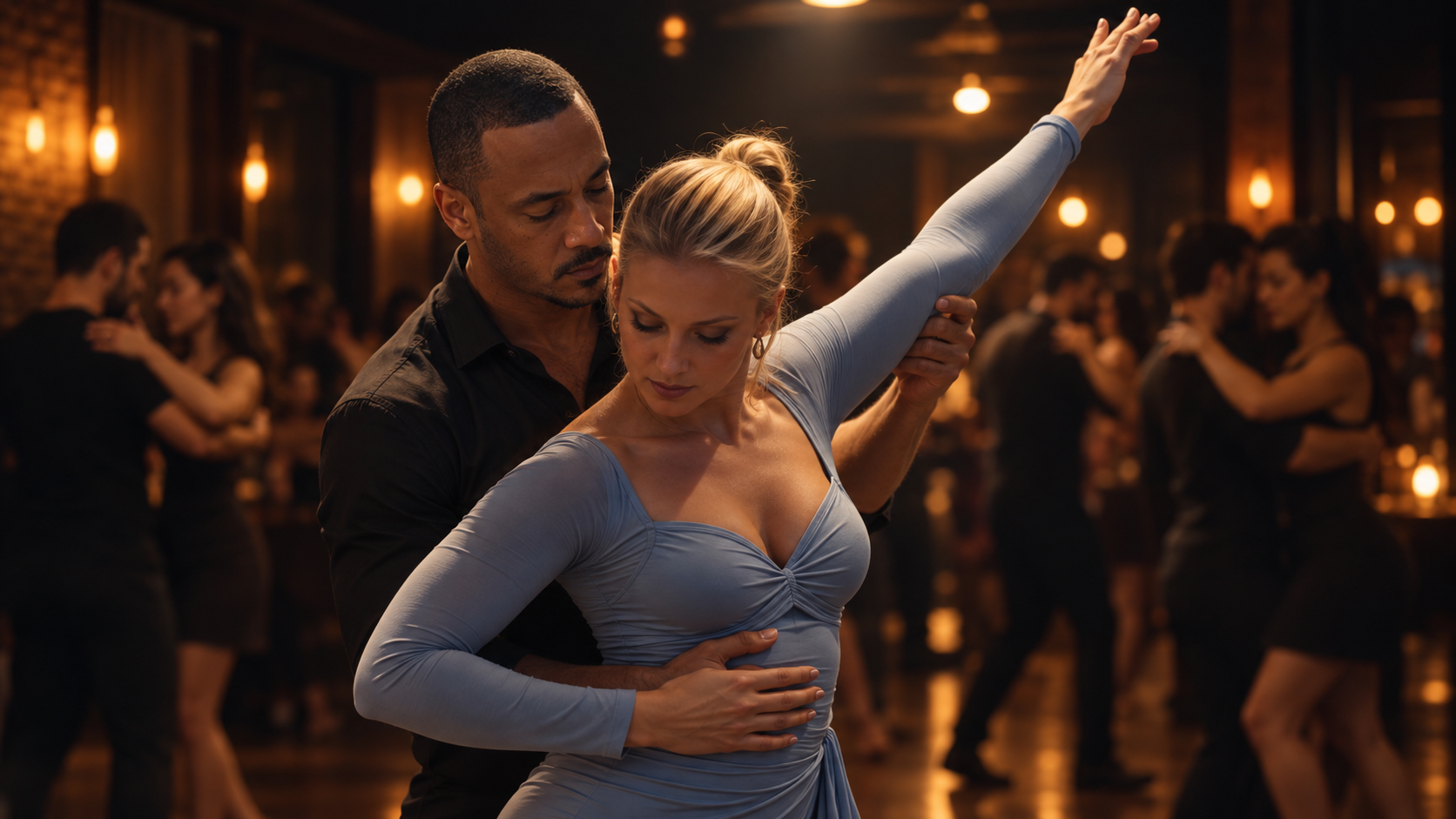
Every Great Dancer
Started Somewhere.
Beginning Kizomba can feel exciting, unfamiliar and sometimes a little frustrating. That is normal.
Nobody begins with perfect timing, perfect connection or complete confidence.
The goal at the beginning is not to look advanced. The goal is to build a foundation that gives you somewhere to grow from.
Simple Things Done Well.
One of the biggest temptations for beginners is wanting to move quickly into advanced-looking movements.
But strong dancers are usually built on simple things done well.
Before worrying about complexity, focus on:
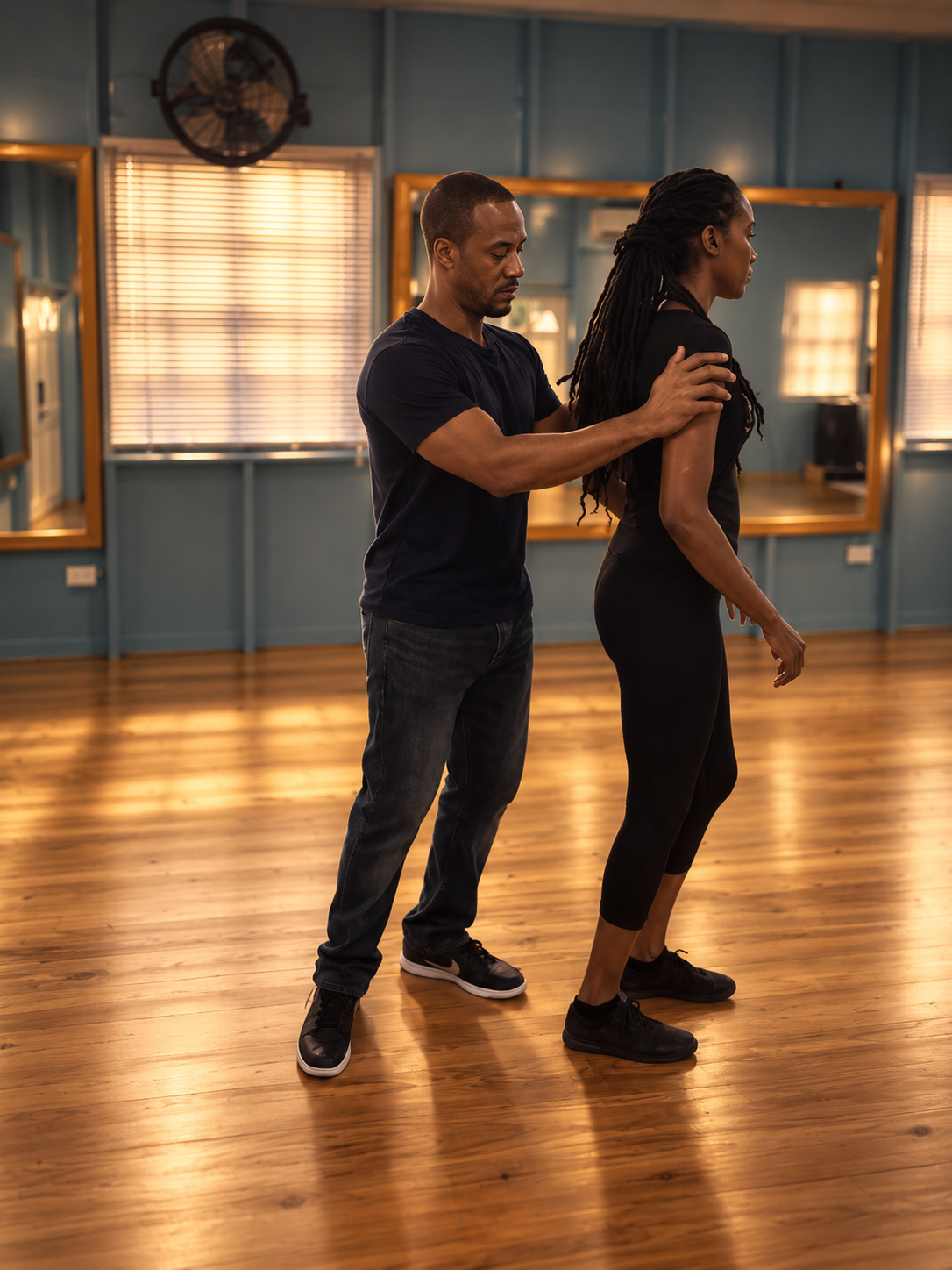
Timing.
Weight transfer.
Balance.
Connection.
Posture.
Lead and follow.
Understanding the music.
The basics may not always feel exciting at first.
But they are what make everything else possible later.
Advanced movement built on weak foundations eventually becomes a limitation.
Learning Is Uncomfortable at First.
Learning a partner dance asks your body to do things it may never have done before.
You are learning to:
Move with another person.
Listen to music differently.
Control your weight.
Respond to signals.
Maintain balance.
Remember technique.
Stay relaxed.
All at the same time.
It can feel awkward.
That does not mean you are bad at dancing.
It means you are learning.
Progress often happens gradually before it suddenly becomes noticeable.
Give yourself enough time to become comfortable with being uncomfortable.
This is one of the most important things a beginner can learn.
Someone else may progress faster.
Someone may already have experience in another dance style.
Someone may naturally understand rhythm more quickly.
Someone may simply have been practising longer than you realise.
None of that tells you what your own potential is.
Comparing yourself constantly to other dancers can turn something enjoyable into unnecessary pressure.
A much better question is:
“Am I better than I was a few weeks ago?”
Your journey is your own.
Depth Beats Volume.
Knowing fifty movements does not automatically make someone a strong dancer.
Sometimes knowing five movements well is far more useful.
Focus on understanding the movements you already have.
Ask:
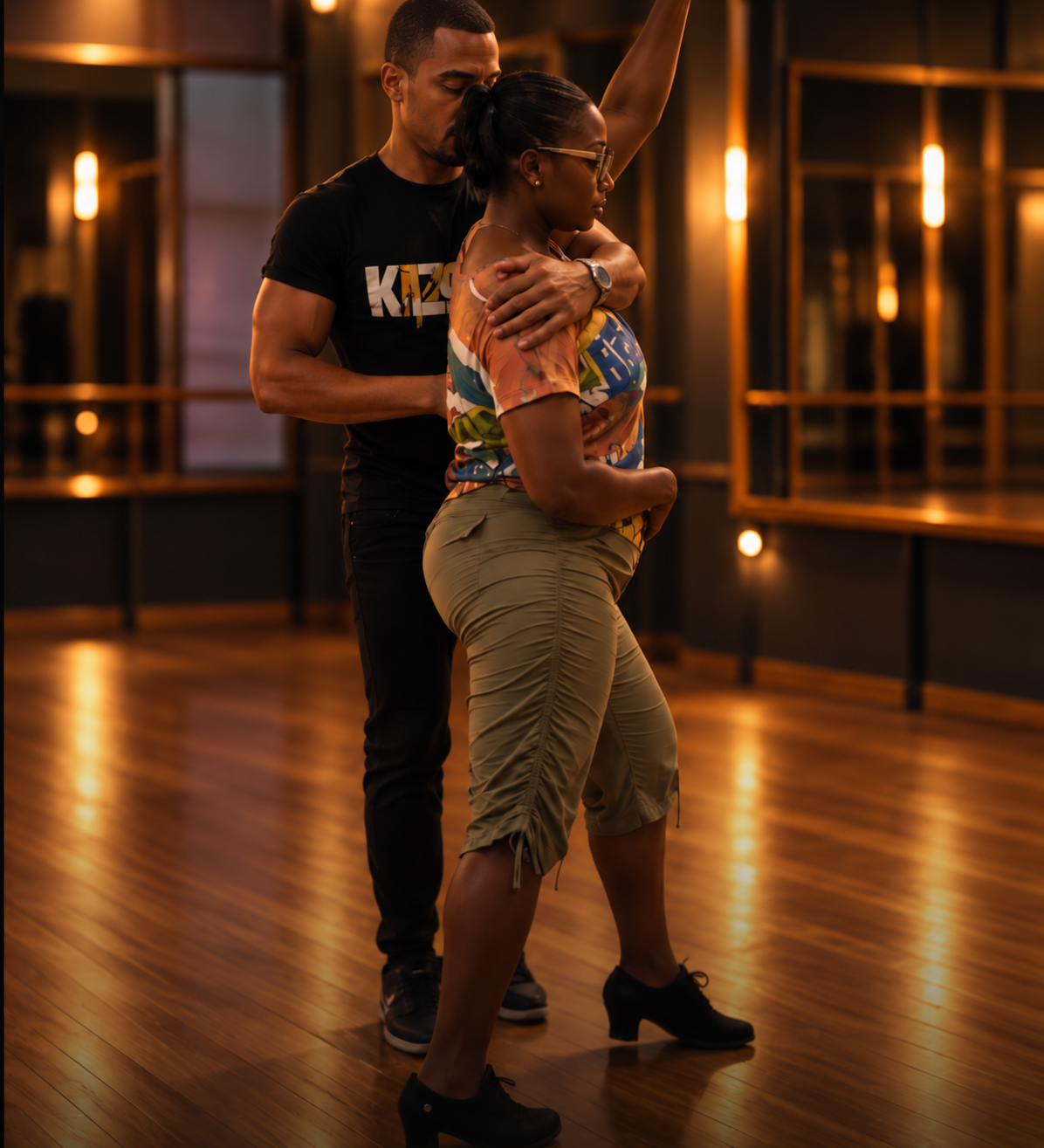
Can you lead or follow them clearly?
Can you maintain your balance?
Can you execute them comfortably?
Can you use them with different partners?
Can you fit them naturally into the music?
If the answer is no, adding ten more movements may not solve the problem.
Build depth before chasing volume.
The lesson introduces the information.
Practice helps your body understand it.
Even a short amount of focused practice can make a difference.
You do not always need a partner.
Basic steps.
Weight transfer.
Timing.
Balance.
Body control.
Listening to Kizomba music.
Ten or fifteen intentional minutes can be more valuable than waiting until the next class and trying to remember everything again.
What you practise becomes more natural.
If something does not make sense, ask.
A good question can save weeks of confusion.
Do not worry about whether the question sounds basic.
You are there to learn.
Sometimes one explanation, one correction or one small technical detail can completely change how a movement feels.
Understanding is more valuable than pretending you already know.
Correction Is Not Failure.
Being corrected is not a sign that you are failing.
It is part of learning.
Every dancer has something to improve.
Every instructor has been corrected.
Every strong dancer you admire has spent time getting things wrong before learning how to do them better.
Try not to take correction personally.
What is this correction trying to help me understand?
That mindset can accelerate your progress dramatically.
Beginners often become tense because they are concentrating.
The shoulders tighten.
The arms become rigid.
The steps become heavy.
And movement becomes harder than it needs to be.
Good connection does not require force.
Good leading does not require pulling.
Good following does not require guessing.
As your understanding improves, try to allow your body to become more relaxed.
Control and tension are not the same thing.
You do not need to prove anything.
Not to your instructor.
Not to your classmates.
Not to people watching.
Your first responsibility is to learn.
Trying to look advanced before you understand the fundamentals often creates habits that eventually have to be corrected.
There will be plenty of time for expression, creativity and more complex movement.
First, build something worth expressing.
Adaptability Grows on the Social Floor.
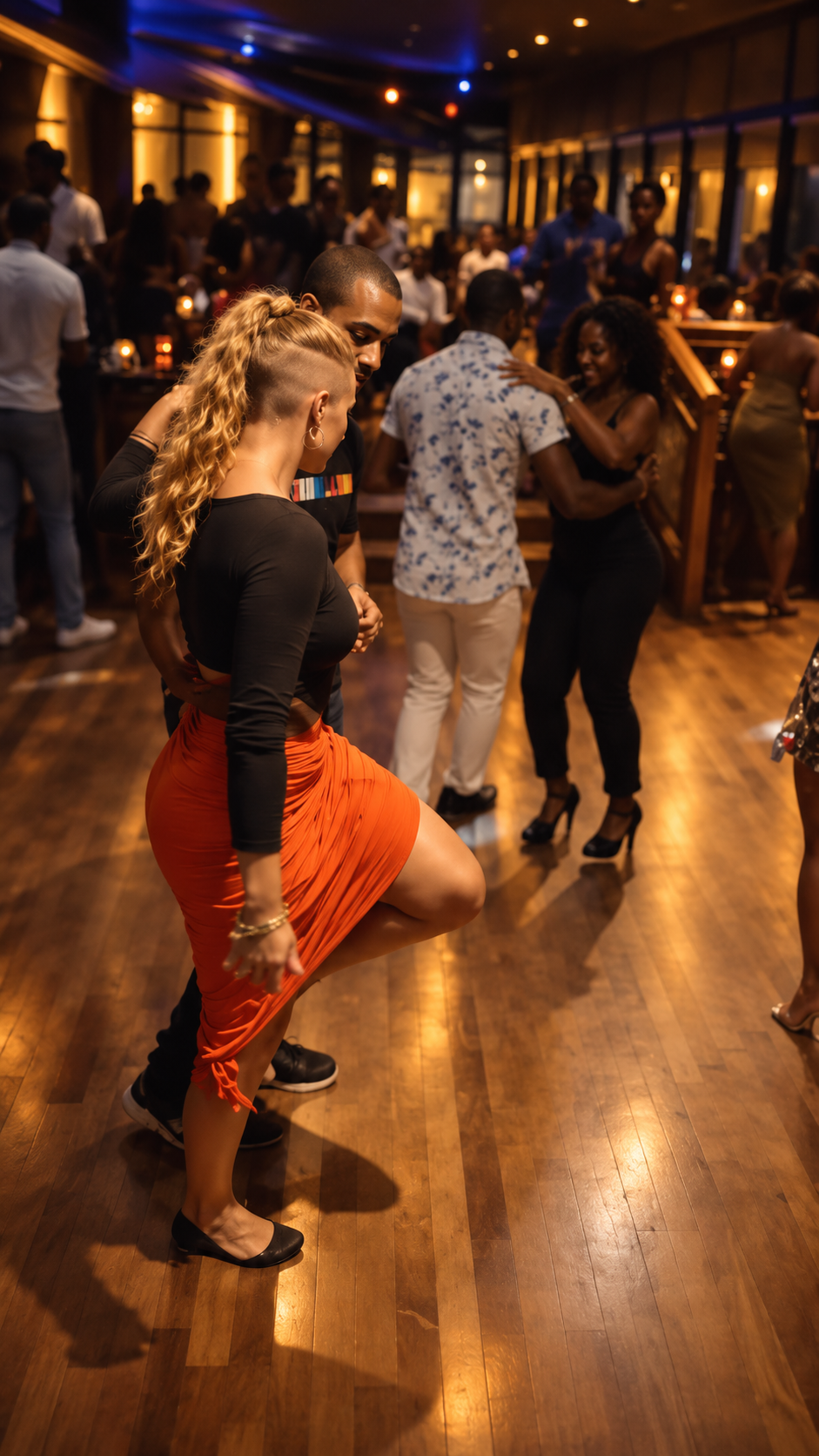
When you become comfortable enough to social dance, try not to dance only with one person.
Different partners give you different information.
One person may have a lighter connection.
Another may move differently.
Another may interpret timing differently.
Learning to adapt helps prevent you from becoming dependent on one particular partner.
That adaptability becomes increasingly important as you progress.
You do not need to practise for hours every day.
But disappearing for several weeks and returning expecting everything to feel natural can slow progress.
Small, consistent effort usually works better.
ATTEND.
PRACTISE.
LISTEN.
REPEAT.
Then do it again.
Progress loves consistency.
Technique matters.
Progress matters.
Understanding matters.
But dance is still supposed to give you something.
Music.
Connection.
Expression.
Community.
Enjoyment.
There will be frustrating moments.
There will also be moments when something finally clicks and you realise that a movement that once felt impossible now feels natural.
Those moments are part of the journey.
Take the training seriously.
But never become so serious that you forget why you started dancing.
Your first goal is to become comfortable with the fundamentals.
Then build. One layer at a time.
You do not need to know everything.
You do not need to progress at anyone else’s speed.
And you certainly do not need to look like an experienced dancer after a few lessons.
You simply need to stay curious enough to keep learning.
Do not rush to become impressive.
Learn to become solid.
Confidence, freedom and expression will come from there.
© 2026 KIZBB · BRIDGETOWN, BARBADOS