

Good Dancing Starts
Before the First Step.
A social dance floor is a shared space.
People arrive with different experience levels, personalities, comfort levels and expectations.
Good social dancing therefore requires more than technique.
It requires awareness. Respect. Consideration.
And the ability to recognise that every dance is a partnership, even if it lasts only a few minutes.
How you behave on the dance floor matters just as much as how you move.
Social dancing should be enjoyable.
But it should also come with realistic expectations.
When you step onto a social dance floor, you are going to dance with different people.
They may move differently.
They may interpret the music differently.
They may connect differently.
They may use familiar movements in ways you have never experienced before.
And that is part of what makes social dancing valuable.
Do not expect every dance to feel exactly like class.
Sometimes you may be asked to respond to something in a slightly different way from what you are accustomed to.
It may still be completely within your ability.
You may already understand the principles.
You may already know the movement.
But another dancer may combine, redirect or interpret it in a way that feels new.
That is not necessarily a problem.
Sometimes that is where learning begins.
Comfort matters.
But becoming a stronger social dancer also means becoming adaptable.
There will be moments when something surprises you.
Something may happen that you were not expecting.
You may suddenly find yourself moving in a way you have never experienced before.
And sometimes your first reaction will simply be to laugh.
That is okay.
If something happens and completely throws you off, recover and keep dancing.
You may even tell your partner:
“Do that again.”
That curiosity is part of the experience.
Social dancing can teach you things that a structured class cannot always reproduce.
You are responding to another human being in real time.
That requires awareness, adaptability and an open mind.
Come prepared to have fun.
Come prepared to be surprised.
Come prepared to learn something.
An Invitation, Not an Obligation.
If you would like to dance with someone, ask.
It can be simple.
A smile.
A polite invitation.
A respectful gesture.
Nobody owes anyone a dance.
And nobody should feel forced to say yes.
If someone declines, respect it.
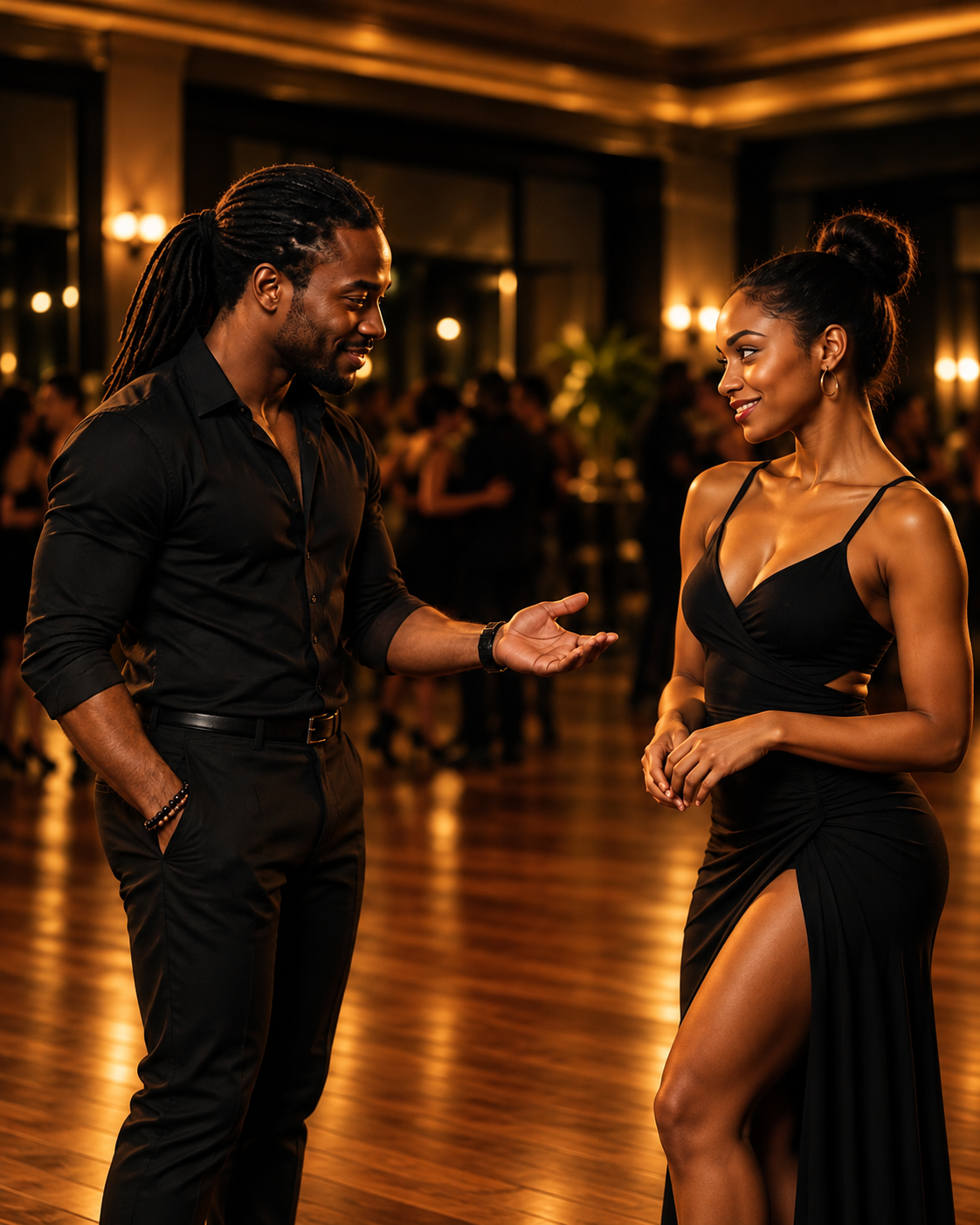
An invitation should always feel like an invitation — never an obligation.
Nobody is obligated to accept a dance.
Someone may decline because they are tired.
Their feet may hurt.
They may need a break.
They may be frustrated, overheated or simply not feel like dancing at that moment.
They may also feel uncomfortable with the person asking, have concerns about hygiene, or simply prefer not to dance with that individual.
Whatever the reason, a refusal should always be respected.
No interrogation.
No guilt.
No explanation is required.
But social dancing is built around interaction, courtesy and mutual respect.
So when you decline someone you otherwise enjoy dancing with, a little warmth can go a long way.
Examples:
“My feet are hurting a little. Let me sit this one out.”
“I’m taking a quick break — maybe the next one.”
“Give me a minute. I need a moment.”
You still have every right to decline without explaining yourself.
The point is not obligation.
The point is courtesy.
In many social dance communities, there is also a traditional courtesy that if you decline a dance because you need a break, you sit that song out rather than immediately accepting another invitation.
It is not a law.
But it can help avoid unnecessary misunderstandings.
Just as you are free to decline someone’s invitation, they are equally free not to invite you again.
That does not necessarily mean they are angry with you.
It may simply mean they interpreted the interaction as a sign that you were not interested.
So if it is someone you enjoy dancing with and you are simply tired or taking a break, handling the refusal warmly can preserve the connection.
You never owe anyone a dance.
But when possible, decline with the same respect with which you would like to be invited.
This is an important distinction in social dancing.
If someone stops asking you to dance, it does not automatically mean they would refuse to dance with you.
It may simply mean they have decided not to be the person initiating anymore.
Perhaps they asked you previously and you declined.
Perhaps the interaction felt uncomfortable or unclear.
Perhaps they felt as though you were not particularly interested.
Perhaps they simply decided there are plenty of other people on the floor they can ask instead.
So they stop asking.
“I never want to dance with this person again.”
versus
“I am not going to keep asking.”
Those are two very different things.
They may be perfectly happy to dance with you if you ask.
They have simply stopped initiating.
There is a big difference between someone not asking you to dance and someone refusing to dance with you.
Do not build your entire social dance experience around waiting for someone else to approach you.
If there is someone you would like to dance with, ask them.
A respectful invitation can come from anyone.
A smile.
Eye contact.
A simple:
“Would you like to dance?”
That is enough.
And the same rules apply regardless of who does the asking.
The other person is free to say yes.
They are free to say no.
And both people should be able to move on comfortably afterward.
If you want the dance, sometimes you have to be willing to ask for it.
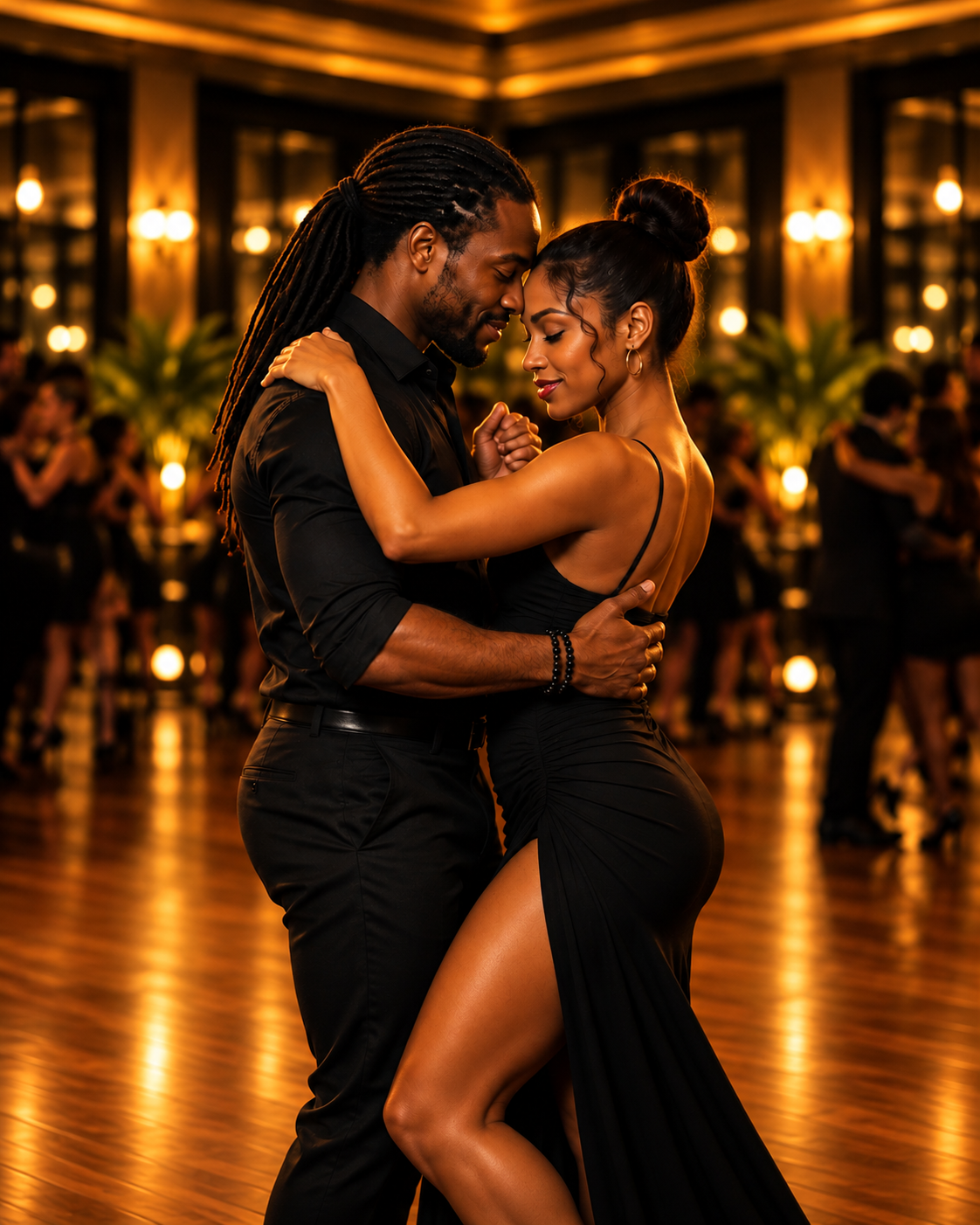
Dance With Your Partner.
Every partner is different.
Some people prefer closer connection.
Others prefer more space.
Some are experienced.
Some are still learning.
Some are comfortable with more variation.
Others are not.
Good social dancing means paying attention to the person in front of you rather than simply executing whatever you want to do.
Dance with your partner — not at them.
When you are dancing with someone, be aware of who you are dancing with and, where possible, what they already understand.
If you know the person, you may already have a good sense of their experience, what they have been taught and what they are comfortable doing.
That shared familiarity gives you more information to work with.
But when you are dancing with someone unfamiliar, you do not yet know those things.
So give yourself time to discover them.
Start with the basics.
Pay attention to how they respond.
Gradually allow the dance to develop as you get a better sense of what feels familiar and comfortable to them.
Do not assume. Discover.
As a general rule, the social floor is not the place to put someone into a movement they clearly do not understand.
That does not mean dancers can never explore or try something new together.
Sometimes familiar dancers will naturally introduce small variations or new ideas during a social dance.
That happens.
But it is usually built on something both people already understand.
If you already know the person well, train with them regularly or understand what they are capable of, then naturally you have more freedom to use the movement you both already share.
If you do not know them, take the time to find out.
Start where they are.
Pay attention.
Let the dance develop.
Matching the dance to the person is not about limiting the dance.
It is about making sure both people can actually share it.
Good leading is communication.
It is not pulling.
Pushing.
Dragging.
Twisting.
Or forcing your partner through something they are not prepared for
If something is not working, simplify.
If your partner does not respond as expected, adapt.
The objective is not to “complete the move.”
The objective is to maintain a safe, comfortable and connected dance.
Never sacrifice your partner’s comfort just to finish a movement.
Kizomba can involve close connection.
That does not mean every person is automatically comfortable with the same level of closeness.
Connection should be appropriate to the dance, the partner and the mutual comfort of both people.
Pay attention to body language.
Respect distance.
Allow the connection to develop naturally.
Closeness should never be assumed.
Social dancing brings people into close proximity.
Basic personal hygiene is therefore part of social etiquette.
Arrive clean.
Wear fresh clothing.
Use deodorant.
Be mindful of strong fragrances.
If you become very sweaty, take a break, dry off or change your shirt if necessary.
Small considerations can make a major difference to someone else’s experience.
Respect for your partner begins before the music starts.
Manage Your Space.
The dance floor belongs to everyone.
Be aware of the space around you.
Avoid movements that take up unnecessary room in a crowded environment.
Do not repeatedly collide with other couples.
Be especially careful with movements that travel, extend limbs or change direction suddenly.
If the floor is crowded, adapt your dancing.
Good dancers do not only manage their partner. They manage their space.
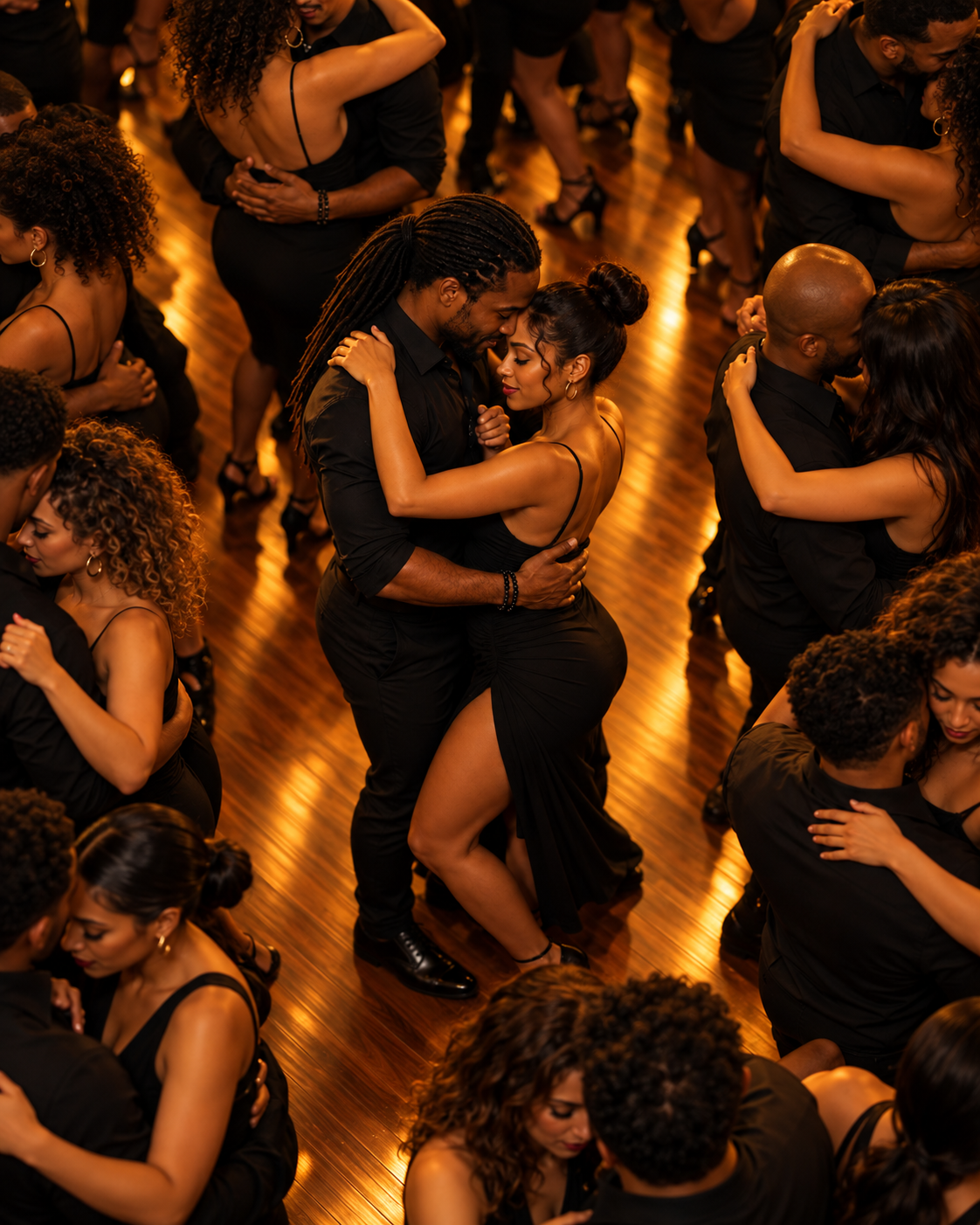
A social dance is not a lesson.
Unless you are that person’s instructor — where brief cues or reminders may naturally happen during a dance — avoid teaching or correcting your partner unless they ask.
They may simply want to enjoy the dance.
They may already know that something went wrong.
They may be working through something in their own way.
If they ask for help, respond respectfully.
If they do not ask, let them dance.
Not every mistake needs to become a lesson.
Something will eventually go wrong.
A movement may be missed.
The timing may be different.
A signal may be misunderstood.
That is normal.
Do not stress.
Do not stop the dance just because something did not happen exactly as expected.
Keep moving.
Adapt.
Recover.
Sometimes what initially feels like a mistake becomes something interesting if both dancers stay relaxed and continue.
You are not trying to create a perfectly rehearsed performance.
You are responding to another person in real time.
When something goes wrong, recover together.
Social dancing is about dancing with someone.
It is not only about what you want to do.
When you step onto the floor with another person, both of you become part of the experience.
The same way you want your partner to contribute to an enjoyable dance, you should be prepared to give that same energy, attention and consideration in return.
Be present.
Pay attention.
Stay connected to what your partner is doing.
A good social dance should never feel like one person is trying their best, while the other person is unresponsive.
Both people matter.
The strongest social dancers understand that responsibility.
They do not only think about what they can add technically.
They think about what they can add to the experience.
A good dance should not be one-sided.
It should be an exchange.
The strongest social dancers do not simply add movements.
They add to the dancing experience.
Social dancing is not a scripted performance.
Even when both dancers understand the same foundations, each person can still bring personality, styling and expression into the dance.
In Kizomba, the leader guides the direction of the dance.
But a follower who is comfortable with the movement and following well may have opportunities to add her own styling or expression within what is being led.
A follower may add something extra to a movement.
A leader may hold a movement slightly longer.
The follower’s response or styling may then inspire the leader to add something he had not originally planned.
And suddenly the dance becomes something neither person planned beforehand.
That is part of the beauty of social dancing.
The leader provides the direction, but both dancers can contribute to the experience.
You are not only executing movements.
You are also paying attention to what your partner brings into those movements and responding accordingly.
If your partner introduces something that is safe, comfortable and within the natural structure of the dance, you do not always need to resist simply because it is different from what you expected.
Pay attention.
Adapt.
Respond.
Allow the moment to develop.
Sometimes the most enjoyable parts of a social dance happen because one person adds something and the other person chooses to play with it.
That interaction can create humour, personality, expression and genuine connection.
There is a difference between something being incorrect and something simply being different.
Structure gives you the language.
What both dancers bring to the moment helps create the conversation.
A dance begins and ends with the song.
Pay attention to when the music starts.
Allow the dance to develop naturally.
Do not rush your partner into movement before you have established connection.
And when the song finishes, let it finish.
Acknowledge your partner.
Thank them.
Then give them the space to decide what happens next.
A dance has a beginning, a middle and an end. Respect all three.
Dancing with someone once does not mean they are expected to dance with you again.
A good dance does not create romantic entitlement.
A friendly interaction does not create personal entitlement.
Social dancing works best when people feel free to participate without unnecessary assumptions.
Enjoy the dance for what it is.
Connection on the dance floor should never be confused with ownership off it.
A beginner may miss signals.
They may be nervous.
They may apologise repeatedly.
They may not know the etiquette yet.
A patient dance with an experienced, considerate person can dramatically affect whether that beginner feels encouraged to continue.
Always remember that we are all still learning.
The way experienced dancers treat beginners helps shape the culture of the entire community.
Every social has its own atmosphere.
Some events are casual.
Some are more formal.
Some may have specific venue rules, expectations or arrangements that make the event possible.
Respect the organisers.
Respect the venue.
Respect the music.
Respect the staff.
And respect the people who are there to enjoy themselves.
If food, drinks or personal belongings are involved, keep them away from areas where they may create hazards or interfere with the dance floor.
But respecting the event also means recognising that there is often reciprocity involved.
Sometimes an establishment allows a dance community to use its space at little or no charge.
That is a courtesy being extended to the dancers and organisers.
When that happens, it is good social etiquette to support the establishment in return.
If there is a bar, restaurant or other service available, patronising the venue is one practical way of showing appreciation.
The venue is helping to provide a place where the community can dance, socialise and enjoy itself.
Our part is to show that we appreciate that opportunity.
They support the event by providing the space.
We support them by patronising the establishment.
That relationship matters.
A venue should be able to see that welcoming the dance community also brings value to their establishment.
Buying a drink, ordering something from the bar or otherwise supporting the venue can be a simple way of saying:
“Thank you for having us.”
This is not only about courtesy.
It can also help create stronger relationships between dancers, organisers and venues and make it easier for these events to continue.
A good dance community does not only enjoy the space it is given. It helps take care of the relationship that makes that space possible.
If you are tired, frustrated, overheated or no longer concentrating properly, take a break.
Fatigue affects balance, decision-making and connection.
There is no prize for dancing every song.
Sometimes the best thing you can do for yourself and your next partner is to sit one out.
Good judgment is part of good dancing.
One of the most important aims of social dancing is to make the person you are dancing with feel comfortable.
Technical ability matters.
Musicality matters.
Connection matters.
But if your partner does not feel respected, included or comfortable in the experience, something important has been lost.
A good social dance should create a space where both people can participate naturally and enjoy what they are sharing.
That means paying attention.
Being present.
Responding to your partner.
Adjusting when necessary.
And remembering that the experience is not only about what you want to do.
Your partner should feel included in the dance, not managed by it.
Comfort does not mean that every dance must be simple.
It does not mean there can never be challenge, variation or surprise.
It means the other person should still feel respected, considered and able to participate in what is happening.
The strongest social dancers understand this.
They do not only think about movements.
They think about the experience they are creating.
They help their partner settle into the dance.
They create confidence.
They make room for the other person to contribute.
A good social dance should leave both people feeling better for having shared it.
Make your partner feel comfortable and respected.
You are not dancing alone.
Your partner matters.
The people around you matter.
The atmosphere matters.
The community matters.
That is why social etiquette is not separate from good dancing.
It is part of it.
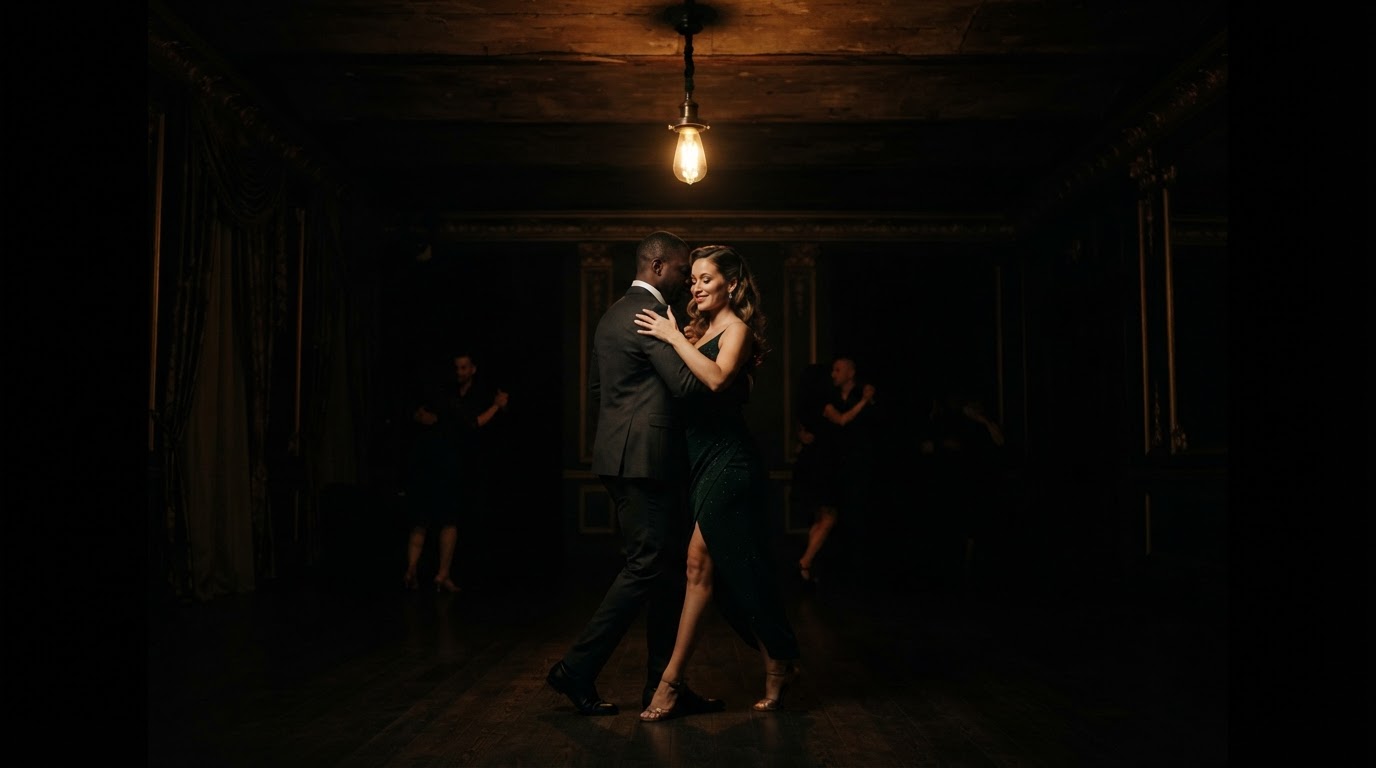
Dance with skill.
Dance with awareness.
Dance with respect.
And leave every partner glad they said yes.
© 2026 KIZBB · BRIDGETOWN, BARBADOS